DDG Insights / Modernization and Industry 4.0
Modernization starts before the failure.
Industry 4.0 begins with a practical path from the systems operating today to the connected capabilities the business needs next. Supportability, useful data and people belong in the same plan.

Modernization and Industry 4.0
When support disappears
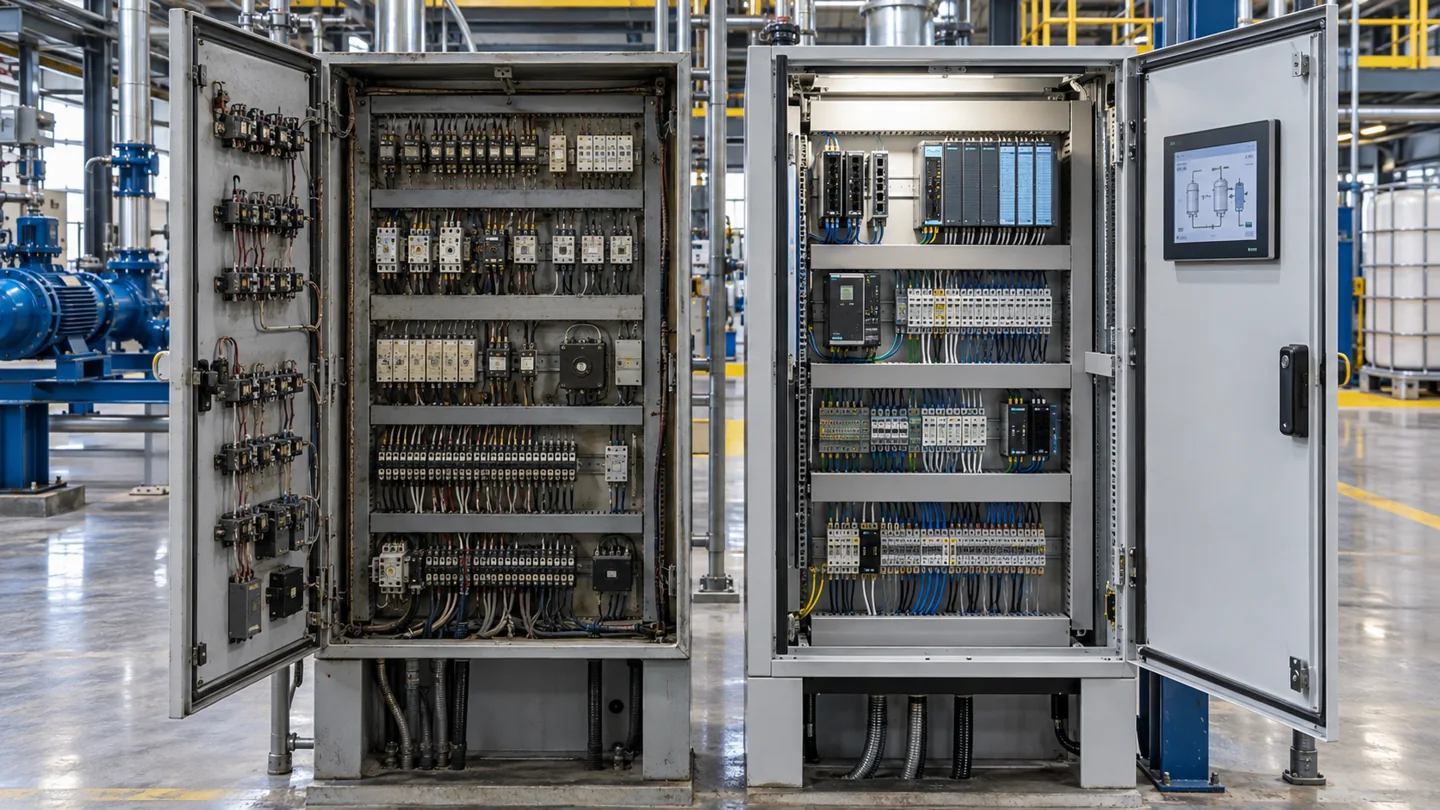
Equipment can keep running long after its manufacturer has stopped supporting it. That creates a planning problem: spare parts, firmware, licenses, documentation, and qualified support may all become harder to find. A system that still runs is not necessarily one the operation can support confidently. The first step is to identify unsupported systems and connect each one to the production process it affects. That gives an operating sponsor a site-grounded risk picture rather than a generic replacement list.
Modernization and Industry 4.0
Modernization does not have to mean one large project
"We cannot afford Industry 4.0" is often a timing and evidence question. A plant may need modernization while facing competing budgets, production constraints, and uncertainty about where investment matters most. The responsible answer is to establish the current state, make exposure visible, and sequence improvements around the operation. A phased plan can separate urgent safeguards from later upgrades and show what information, access, standards, and acceptance decisions are needed before implementation begins. The goal is a decision path that fits the plant's priorities and budget process.
Modernization and Industry 4.0
Technology needs people who can use it
New dashboards, sensors, and data services only help when operators and technicians know what they are seeing and how it should change a decision. Readiness includes documentation, ownership, training needs, and confidence in the information. A plan that ignores those conditions can leave a plant with newer equipment and the same uncertainty.
Modernization and Industry 4.0
Build the evidence first
The 21-Day Automation Jumpstart gives an owner or operating sponsor a current-state view, prioritized risk picture, and 90-day modernization roadmap for one agreed site or process. It is a planning engagement: implementation, hardware, licenses, and ongoing leadership are scoped separately. The result is a clearer basis for deciding what to protect, what to modernize, and what to measure next.
Bring one problem.
Let's define the next step.
A short conversation about the operation, the decision and where DDG can help.