Skip to content
Griffin, Georgia(678) 783-8873
DDGAUTOMATION
Menu

Industrial AI implementation

Put AI to work on one operating problem at a time.

Industrial AI is useful when it helps a person find the right record, prepare a better handoff, or see a recurring pattern sooner. DDG selects one job, establishes a baseline, and tests the result against real examples before the scope expands.

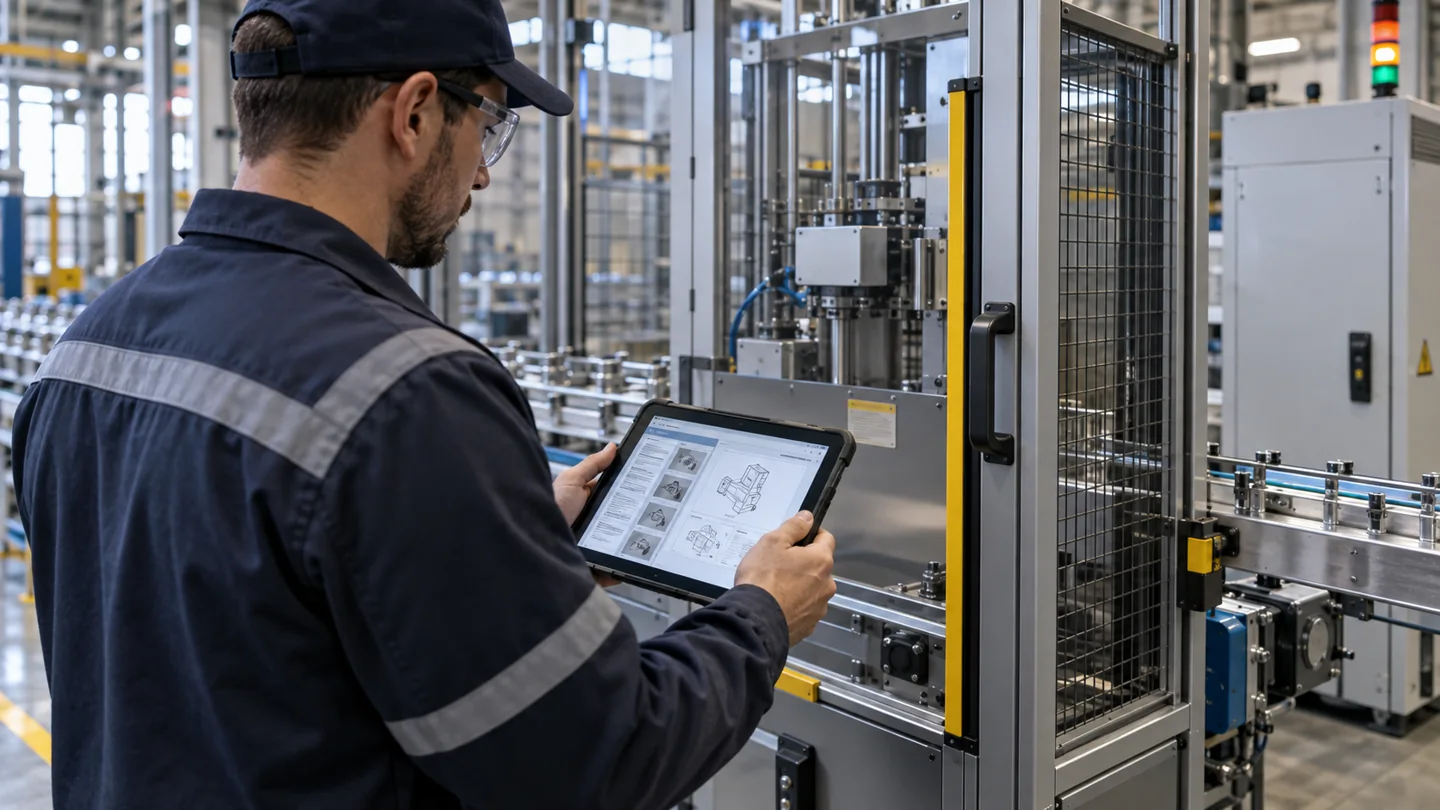
Technician using a tablet to review maintenance information beside a guarded machine

Choose one track

Start with a job people already do.

The first pilot follows one primary path. Maintenance knowledge assistance searches approved manuals, work orders, and fault history, then returns cited sources and a draft investigation checklist. Shift and event analysis aligns alarms, production state, and downtime context to prepare a reviewable handoff.

01

Maintenance knowledge

Find relevant approved information faster and show the source behind each answer.
02

Shift and event analysis

Summarize recurring patterns and reconcile findings to source events and downtime records.

The data foundation

Connect operational context before adding AI.

Useful industrial AI begins with approved records and a defined OT/IT data path. SCADA events, historian records, maintenance documents and MES or OEE information can provide context when their interfaces, identifiers and timestamps support the selected question.

  • Identify the authoritative equipment and production records
  • Use approved read access and defined data interfaces
  • Check source coverage and data quality against representative cases
  • Keep source references and human review in the operating workflow

Readiness first

Test the data and the decision together.

A named sponsor, usable records, approved access, a reviewer, and a measurable baseline are required. The pilot replays representative examples, runs alongside current work, records corrections, and produces an acceptance report.

  • Approved documents or defined event feeds
  • Asset names, identifiers, and timestamps where needed
  • A reviewer who can accept, correct, or reject output
  • An agreed measure of usefulness, time, and error

Practical boundary

Use AI for context and people for authority.

AI can interpret language, search approved knowledge, and explain options. Deterministic calculations, approved systems, and authorized people remain responsible for quantities, constraints, production decisions, and control changes.

Related insights

Put the next decision in context.

Explore the operating questions behind this service.

01

Make critical plant knowledge available beyond one shift

Keep approved maintenance knowledge available across shifts.

Read the insight

OT/IT integration

Give plant data a useful path.

A typical integration connects operating context with the people and business processes that need it. The project defines the sources, interfaces, access and validation at each step.

  1. Equipment and controls

    PLCs, HMIs and field devices

  2. Operational context

    SCADA, events and historian records

  3. Production information

    MES, OEE and SQL-connected data

  4. Business action

    Reporting and supervised AI workflows

Before we talk

A few practical answers.

Do we need months of clean data before talking?

No. A readiness discussion can establish what exists, what is missing, and whether the chosen question is testable.

Is this predictive maintenance?

Only if a defined use case, suitable data, and a test demonstrate useful warning performance. An anomaly alone is not proof of prediction.

Can the system control equipment?

The initial work is read-only and supervised. Direct autonomous production and safety control are outside the first pilot.

Bring one problem.
Let's define the next step.

A short conversation about the operation, the decision and where DDG can help.

Discuss one plant workflow ↗